- These list items are microformat entries and are hidden from view.
- https://dltj.org/article/2d-barcodes-for-learning/
- [caption id="attachment_1507" align="alignright" width="216" caption="QR-Code pointing to DLTJ"][/caption] This morning I attended a presentation on "Using QR Codes and Mobile Phones for Learning" at the Ohio Educational Technology Conference. Presented by Thomas McNeal and Mark van't Hooft from Kent State University, the example used in the presentation was their GeoHistorian Project from the 2009 ISTE conference. By using a pamphlet of 2-D barcodes labeled with strategic locations at the World War II Memorial in Washington, DC, participants using barcode scanners on smartphones were able to call up text and media from various websites while walking around the memorial. They put together a video showing participants walking through the space and their impressions of the 2-D barcode-enhanced experience.Tom emphasized the need to have an activity that is relevant to the technology. As he put it, "Use the technology to ampliy the activity." In this specific case, the 2-D barcodes pointed to text, pictures, and videos that provide additional background to the components depicted in the World War II Memorial. As participants mentioned in the video, it is a way add context to the experience of walking through the memorial.I had one minor quibble with the execution of the project. The presenters were using EZcodes, a 2-D barcode format licensed exclusively to ScanBuy rather than the emerging de facto QR codes. The problem with EZcodes is that what is encoded is an identifier that is translated by the ScanLife smartphone app to the final destination. By contrast, a QR code has the actual content -- a short snippet of text, a URL, a phone number, etc. -- actually encoded in the barcode. With an EZcode, the application on one's smartphone has to look up the value of the identifier at ScanLife's service before going to the final destination. With a QR code, the smartphone application can go right to the destination website. The EZcode/Scanbuy scheme has privacy and sustainability issues. First, according to the terms-of-service for the ScanLife reader, each reader application is assigned a unique identifier; because the application must contact the ScanLife with the 2-D barcode identifier to find the value behind the identifier, ScanLife knows everything you scan. Secondly, the ScanLife server is a mandatory intermediary in the process, so if ScanLife goes away all of the barcodes become worthless. This is somewhat similar to the problem with music encumbered with digital rights management; if the server is unavailable, the music file is worthless. ((See, for example, DRM sucks redux: Microsoft to nuke MSN Music DRM keys, and also how Wal-Mart Reverses Decision To Shutdown Digital Music DRM Servers.)) QR codes, though, since the data is encoded in the barcode itself, does not have either of these problems.The text was modified to remove a link to http://www.rcet.org/dvcproject/geohistorian.html on February 11th, 2011.The text was modified to remove a link to http://www.etech.ohio.gov/jcore/scheduler/EventSessionDetail.jsp?eventSessionGUID=A0D328EC-09B5-40D7-BE35-B6501041E074 on November 16th, 2012.
- 2010-02-02T18:52:38+00:00
- 2018-01-15T20:28:01+00:00
Experiential Learning Enhanced with 2-D Barcodes
[caption id="attachment_1507" align="alignright" width="216" caption="QR-Code pointing to DLTJ"]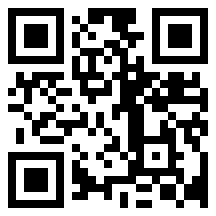 [/caption] This morning I attended a presentation on "Using QR Codes and Mobile Phones for Learning" at the Ohio Educational Technology Conference. Presented by Thomas McNeal and Mark van't Hooft from Kent State University, the example used in the presentation was their GeoHistorian Project from the 2009 ISTE conference. By using a pamphlet of 2-D barcodes labeled with strategic locations at the World War II Memorial in Washington, DC, participants using barcode scanners on smartphones were able to call up text and media from various websites while walking around the memorial. They put together a video showing participants walking through the space and their impressions of the 2-D barcode-enhanced experience.
Tom emphasized the need to have an activity that is relevant to the technology. As he put it, "Use the technology to ampliy the activity." In this specific case, the 2-D barcodes pointed to text, pictures, and videos that provide additional background to the components depicted in the World War II Memorial. As participants mentioned in the video, it is a way add context to the experience of walking through the memorial.
I had one minor quibble with the execution of the project. The presenters were using EZcodes, a 2-D barcode format licensed exclusively to ScanBuy rather than the emerging de facto QR codes. The problem with EZcodes is that what is encoded is an identifier that is translated by the ScanLife smartphone app to the final destination. By contrast, a QR code has the actual content -- a short snippet of text, a URL, a phone number, etc. -- actually encoded in the barcode. With an EZcode, the application on one's smartphone has to look up the value of the identifier at ScanLife's service before going to the final destination. With a QR code, the smartphone application can go right to the destination website.
The EZcode/Scanbuy scheme has privacy and sustainability issues. First, according to the terms-of-service for the ScanLife reader, each reader application is assigned a unique identifier; because the application must contact the ScanLife with the 2-D barcode identifier to find the value behind the identifier, ScanLife knows everything you scan. Secondly, the ScanLife server is a mandatory intermediary in the process, so if ScanLife goes away all of the barcodes become worthless. This is somewhat similar to the problem with music encumbered with digital rights management; if the server is unavailable, the music file is worthless. ((See, for example, DRM sucks redux: Microsoft to nuke MSN Music DRM keys, and also how Wal-Mart Reverses Decision To Shutdown Digital Music DRM Servers.)) QR codes, though, since the data is encoded in the barcode itself, does not have either of these problems.
The text was modified to remove a link to http://www.rcet.org/dvcproject/geohistorian.html on February 11th, 2011.
The text was modified to remove a link to http://www.etech.ohio.gov/jcore/scheduler/EventSessionDetail.jsp?eventSessionGUID=A0D328EC-09B5-40D7-BE35-B6501041E074 on November 16th, 2012.
